What Every 9th and 10th Grader Should Do
College counseling services encompass an array of offerings, from high school course selection for eighth graders to building a balanced college list for seniors to apply to. But in my dozen years running Crimson Coaching, one of the most frequently asked questions that parents ask is, “When should my child be doing what during the four years of high school to best position themselves for college applications?”
Since college counseling services also entail educating parents and the broader public, I’ll share two brief, year-by-year guides. This month, we’ll cover ninth and tenth grades; next month, eleventh and twelfth. No matter which grade your child is in right now, I recommend perusing both guides. Some upperclassmen haven’t yet accomplished items on the list below – but they should do so as soon as possible! And parents of middle schoolers and underclassmen will benefit by learning what’s coming down the pike, outlined next month.
9th Grade: Master the Academic and Social Transition to High School, College Counseling Services Recommend
As a high school teacher during the 1990s through early 2010s, I taught ninth graders more frequently than I did students in any other grade. A challenging but joyfully zany bunch, freshmen usually take several months to hit their stride in high school. Academic rigor and expectations skyrocket at the same time faculty oversight plummets. Meanwhile, the larger student body of most high schools come with multiplied extracurricular opportunities – and temptations. It’s no wonder many ninth graders flail.
The best advice my college counseling services could offer ninth graders is to:
· prioritize getting good grades above all-consuming extracurriculars (a sound strategy for all four years of high school)
· learn time management (which includes at least eight hours of sleep every night) and personal materials organization (e.g., backpacks, folders, papers)
· limit your extracurriculars to just one intense activity (e.g., the musical; a varsity sport)
· explore a variety of less intense extracurriculars (e.g., clubs that meet once per week) to discover new interests and friends
· start visiting a wide variety of college campuses near you (i.e., every permutation of S/M/L, public/private, and urban/suburban/rural within a two-hour drive) to assess “fit type”
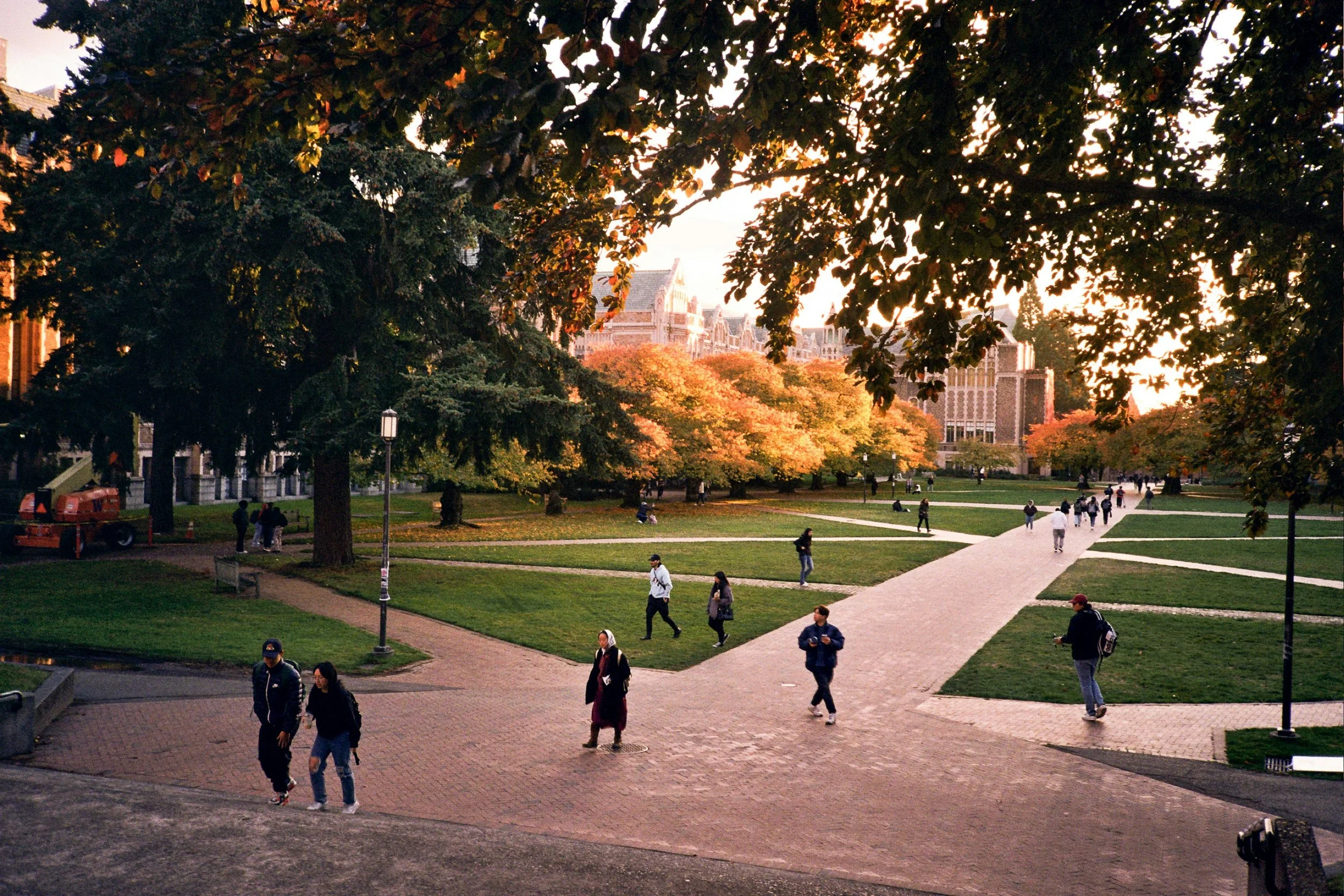
Image by David Schultz on Unsplash
10th Grade: Deepen Some Academic and Extracurricular Interests, Say Most College Counseling Services
After freshman-year exploration, sophomores can decide which activity they want to pursue with greater focus, perhaps even seeking leadership responsibilities in a favorite club or sport. Likewise, first-year grades and experiences should inform which subjects they might like to study more rigorously, moving from a general or honors track to an AP- or IB-level, for example.
If your sophomore struggled academically the year before, my college counseling services would recommend additional support in whichever subject(s) they found most challenging. Admissions officers (AOs) may overlook rocky first-year grades, but they see similar second-year GPAs as a pattern. Remember: AOs will most likely assess students’ academic ability on just their first three years of high school. (See more on this in the 11th-12th grade timeline on April 14.)
For sophomores (my favorite grade to teach!), my college counseling service recommends:
· Take (an) advanced-level course(s) in (a) subject(s) you love
· Seek leadership responsibilities in an extracurricular you’re passionate about
· Jettison 9th-grade activities you didn’t love to find time for the above two items
· If you took Algebra II this year, prepare for the SAT or ACT during the summer before junior year (see 11th grade advice next month for more details)
· Continue visiting diverse colleges, while starting online exploration of out-of-state campuses matching the type of campus (e.g., small, private, suburban) you discovered nearby so you can build a balanced list next year
· Explore stress-relieving methods (e.g., yoga, meditation, therapy) if anxiety is an issue
· Testing and treating for ADHD if that might be present (Not only will receiving treatment and support enhance the quality of the student’s life and grades, but the College Board [SAT] and ACT will often offer extra time accommodations — which sometimes take months to get approved.)
Conclusion: College Counseling Services Help Families Through Every Bullet Point – And More!
Believe it or not, the lists above represent just the tip of the college counseling services iceberg. Each bullet point could fill its own blog post (some do and will!), an entire parent-student counseling session, or weeks of my behind-the-scenes research. Because I’ve presented the recommendations so schematically (to avoid the natural “tl; dr” reaction ), you might have questions. If you do, please don’t hesitate to reach out here. If you don’t, please tune back in on April 14, when the upperclassmen version will appear!
In the meantime, let me know what you think about these recommendations in the comments below. As the parent of an upperclassman, do you have another to add? As the parent of an underclassman, anything you’re uncertain about?

Image by William Christen on Unsplash
About the Author
Dominique Padurano, M.S., Ed., Ph.D. – aka “Dr. P.” – loves helping students across the globe fulfill their academic and personal goals. President and Founder of Crimson Coaching, Dr. P. herself personally tutorsstudents in English, French, History, Math, Spanish, and study, time management, and organizational skills; prepares them for the SAT, ACT, GRE, ISEE, AP, and other exams as a test prep coach; and shepherds them through the college application process as a private admissions counselor and essay coach. Dr. P.’s students have earned admission to Harvard (her own alma mater), Princeton, Stanford, and other top universities, as well as scholarships – including full rides – totaling more than $2 million. Read more about Dr. P. on Google, straight from the hearts and minds of Crimson Coaching’s parents and students.